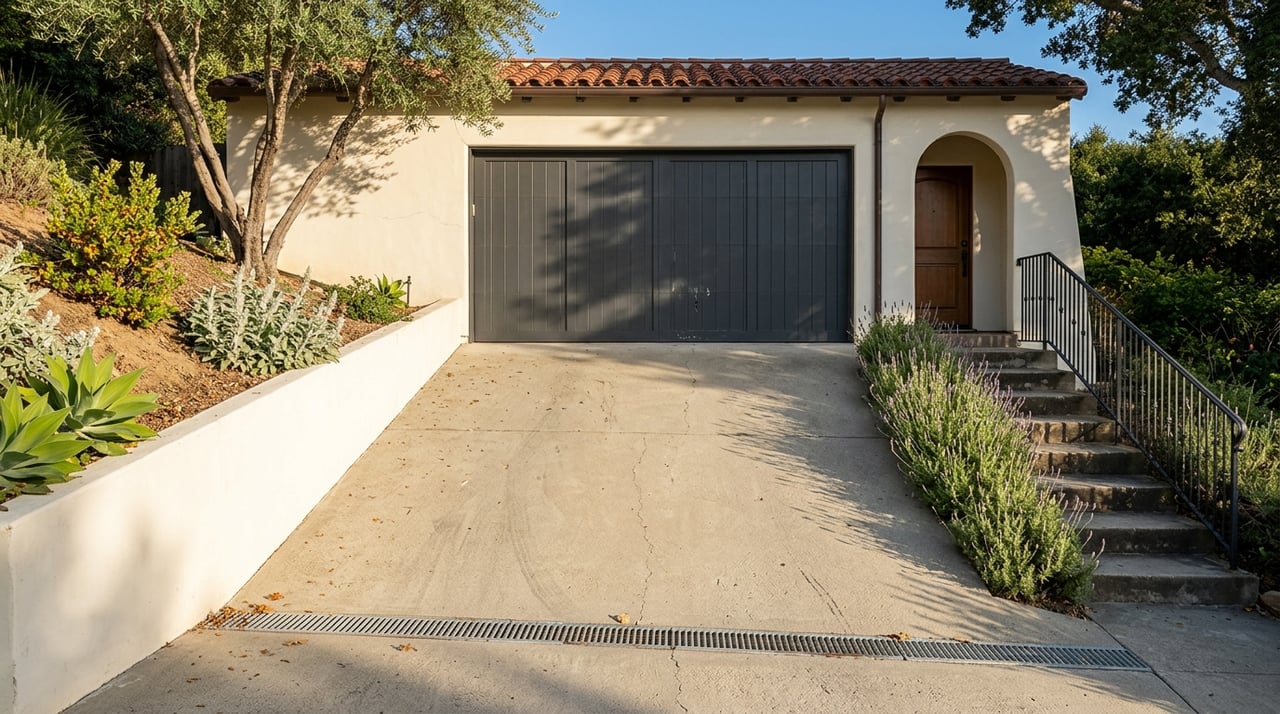
Buying in the Hollywood Hills can feel exciting right up until you realize you are not just buying a house, but a hillside lot, a street approach, a view line, and a stack of property records. If you are hoping for a smooth, informed purchase, that learning curve matters. The good news is that once you know what to look for, the process becomes far more manageable. Let’s dive in.
Hollywood Hills is not one uniform market
If you are starting your search by looking at price per square foot alone, the Hollywood Hills can be misleading. This market behaves very differently from one pocket to the next, and even from one street to the next.
The City of Los Angeles updated the Hollywood Community Plan in January 2025, and the plan area includes Hollywood, Los Feliz, East Hollywood, Griffith Park, and several hillside communities. The area also includes pocket-level overlays and regulations, including the Hillside Construction Regulation supplemental use district, the Mulholland Scenic Parkway Specific Plan, and several historic preservation overlay zones.
That matters because the city’s stated goals include directing growth away from hillsides and low-density neighborhoods, strengthening subdivision controls in the hills, protecting ridgelines, and expanding retaining-wall controls. In practical terms, two homes with similar square footage can carry very different risks, limits, and long-term value depending on where they sit.
Current market signals also show that this is not a simple, one-note neighborhood. Redfin reported a median sale price of $1.7 million for Hollywood Hills over the three months ending May 2026, up 4.5% year over year. Zillow reported an average home value of about $1.95 million, down 2.1% year over year, about 40 days to pending, and 368 homes for sale, while Realtor.com labeled the neighborhood a buyer’s market in 2026.
The takeaway is simple: you are not shopping one Hollywood Hills market. You are shopping a series of micro-markets where access, lot utility, views, and condition can matter just as much as the address itself.
Access can shape value
One of the first surprises for many buyers exploring Los Angeles homes for sale in the hills is how much the approach to the property affects daily life and resale potential. In hillside areas, the street itself is part of the purchase.
The City of Los Angeles Complete Streets Design Guide says hillside streets are often narrow and winding residential roads. Hillside local and limited streets often branch off hillside collectors and may serve only a small number of homes.
That can influence everything from ease of parking to service access to your comfort level driving home at night. A beautiful house on a challenging street may still be worth it to you, but it is important to weigh the tradeoff clearly.
The Los Angeles Fire Department also evaluates access through public and private streets and fire lanes for width, grade, turning radii, turnarounds, overhead clearances, load capacity, parking restrictions, and secured entrances. Fire-access gates also cannot reduce the required roadway width below 20 feet free and clear.
The Bureau of Engineering adds another practical point. If the roadway fronting a hillside property is less than 20 feet wide, an owner may be required under certain permit conditions to widen or improve it to a minimum paved width of 20 feet.
Why lot utility matters more than lot size
In flatter neighborhoods, buyers often focus on raw lot size. In the Hollywood Hills, what you can actually do with the lot may matter more.
Because the community plan emphasizes stronger subdivision controls, ridgeline protection, and retaining-wall controls, lot shape and buildability can carry more weight than the number of square feet on paper. A large but awkward site may offer less flexibility than a smaller lot with better topography and access.
This is one reason hillside buying often rewards a more strategic review process. You want to understand not just what exists today, but also what constraints may shape future improvements, maintenance, or expansion.
Views are valuable, but not all views are equal
Many buyers head to the Hollywood Hills for one reason: the view. That instinct makes sense, and the market often reflects it. If you are preparing to list, understanding this value is key—check out our guide on preparing a Hollywood Hills view home for sale.
Appraisal literature summarized by the Appraisal Institute shows that scenic views can create measurable premiums. One cited study found that a good view added an 8% premium, while other studies found larger premiums in certain waterfront and coastal settings.
Still, view value is not a simple yes-or-no feature. The same literature notes that premiums vary based on view quality, view breadth, and whether the view is durable or could be blocked by future development.
In Hollywood Hills terms, there is a meaningful difference between a wide city-lights or canyon outlook and a partial view that may be easy to obstruct. When buyers compare homes, the market often prices those differences in very real ways.
View permanence deserves close review
A great view today is not always a guaranteed view tomorrow. In a hillside market, neighboring topography, nearby lots, and local planning rules can all affect how durable that outlook really is.
That does not mean you should avoid a home with a less protected view. It does mean you should ask better questions during your search and due diligence.
For many buyers, this is where local guidance becomes especially valuable. A home that feels like a bargain compared with another listing may be priced that way for reasons that do not show up in listing photos.
Inspections are a major part of the process
In the Hollywood Hills, inspections are not just a formality. They are one of the most important parts of protecting yourself before you close.
The Los Angeles Department of Building and Safety says its Grading Division oversees soils and foundations, grading, excavations, and fills. In hillside areas, grading or earthwork requires permits, and a soils and or geology report is usually required before permits are issued.
LADBS also lists basement excavations for new hillside buildings, pool excavations, and retaining-wall cuts, backcuts, and backfill among the types of work that require grading plan checks. Reports typically address slope instability, earthquake-induced landslides, liquefaction, and nearby active faults.
For you as a buyer, that means drainage, retaining walls, foundation performance, and any signs of slope movement should be treated as core due-diligence issues. They are not side notes. They are central to understanding the property.
Permits and past work need careful review
Many hillside homes have had upgrades over time, and not every improvement carries the same level of documentation. That is why permit history matters.
The Baseline Hillside Ordinance guide says permit applicants generally must submit a slope analysis map prepared by a California-licensed civil engineer or land surveyor. It also states that geotechnical investigation reports are required for remedial grading, and that on slopes of 100% or greater, LADBS requires the most stringent level of geotechnical analysis feasible.
If a property has added decks, retaining walls, hardscaping, excavation, or other substantial site work, you will want to review what was done and how it was approved. In hillside properties, paperwork is part of the asset.
Wildfire and insurance should be part of budgeting
Ownership cost in the Hollywood Hills is not only about the mortgage payment. Insurance and wildfire-related maintenance can affect your monthly and annual budget in a meaningful way.
The Los Angeles Fire Department says the Very High Fire Hazard Severity Zone includes portions of Hollywood. Its brush-clearance rules require year-round compliance within 200 feet of structures and within 10 feet of combustible fences or roadway and driveway areas, and property owners are directed to the state fire-severity map to verify parcel-specific status.
California’s Department of Insurance says wildfire mitigation can qualify homeowners for wildfire-safety discounts. It also notes that the FAIR Plan is the insurer of last resort and that CAL FIRE hazard maps themselves do not determine insurance rates or availability.
The practical lesson is that wildfire risk and mitigation still matter when you are planning the true cost of ownership. Before you get too far into a purchase, it is wise to understand the parcel’s fire-zone status and ask early questions about current coverage, future insurability, and likely premium ranges.
A smart buyer checklist for Hollywood Hills
If you are serious about buying in the Hollywood Hills, it helps to approach the process with a tighter checklist than you might use in a flatter, more uniform neighborhood.
Here are some of the most useful items to review before or during escrow:
- Verify the parcel’s hillside status and fire-zone status
- Ask for prior soils, geology, grading, and retaining-wall records
- Review permit history for major exterior and structural work
- Evaluate street width, driveway access, gates, and turnarounds
- Look closely at drainage, slope conditions, and signs of movement
- Consider whether the lot is functional, not just large
- Assess the quality and likely permanence of the view
- Budget for specialized inspections and possible insurance surprises
The bottom line for buyers
Buying in the Hollywood Hills is often less about finding the biggest home and more about understanding the full property package. The lot, the access, the view, and the paperwork all play a real role in what you are buying.
When those pieces line up, a Hollywood Hills purchase can be a strong lifestyle decision with lasting appeal. When they do not, the true cost may show up later through inspections, permits, insurance, or limits on future plans.
If you want calm, strategic guidance as you evaluate hillside opportunities in Los Angeles, Barrentine Group is here to help you buy with more clarity and confidence. Work with us today to start your search.
FAQs
What should buyers expect from the Hollywood Hills housing market?
- Buyers should expect a pocket-specific market where pricing and value can vary widely based on access, lot utility, condition, and view quality rather than the neighborhood name alone.
Why does street access matter when buying in the Hollywood Hills?
- Street access matters because hillside roads are often narrow and winding, and city and fire access standards can affect daily convenience, safety considerations, and future improvement requirements.
How important are views when buying a home in the Hollywood Hills?
- Views can add meaningful value, but the premium depends on the quality, breadth, and permanence of the outlook rather than simply whether a home has a view.
What inspections are most important for Hollywood Hills homes?
- Buyers should pay close attention to inspections related to drainage, retaining walls, foundations, slope stability, and any signs of soil movement or past earthwork.
What permit records should buyers review for a Hollywood Hills property?
- Buyers should ask for records related to grading, geology, soils reports, retaining walls, excavations, pools, decks, and other significant structural or site improvements.
How does wildfire risk affect buying in the Hollywood Hills?
- Wildfire risk can affect brush-clearance obligations, insurance options, ownership costs, and the importance of property-specific mitigation planning during due diligence.