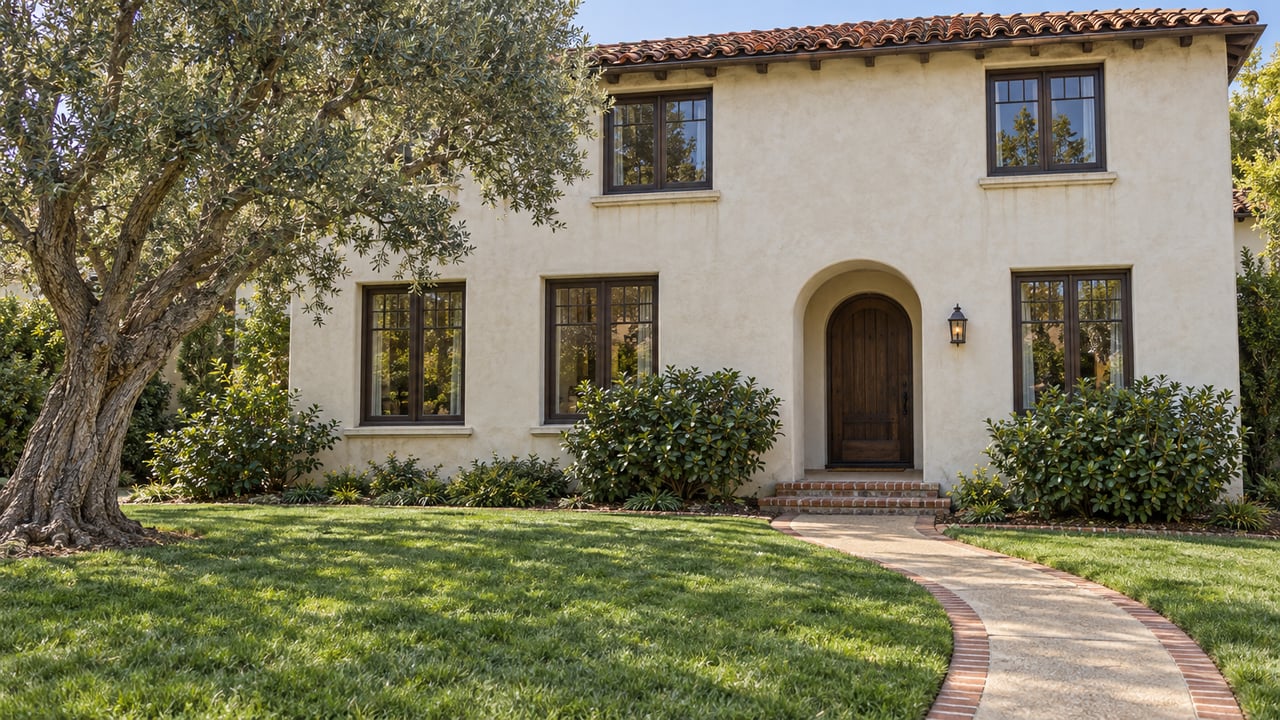
One of the objects LACMA is putting in the Resnick Pavilion this month is a piano. Paul R. Williams customized it for his own house, and his family recently donated it to the museum. The house was his 1952 residence, a modern home in a neighborhood that, as Beverly Press reported, "had until recently barred Black homeowners." The exhibition starts with that house.
"Paul R. Williams: Architect for Living" opens November 15 at LACMA, 5905 Wilshire Blvd., and runs through May 31, 2027. It includes more than 120 drawings, photographs and other materials from Williams' archive, and many of them have never been shown publicly. It's also only one part of a larger program. Two other museums are mounting their own Williams shows. The museum's own programming sends visitors out by car to his buildings. Even the galleries end with what happened to his work after he finished it. For anyone living between La Brea and Fairfax, LACMA works as a starting point for the season, and it's just down the street.
A career laid out like a city map
Williams was born and raised in Los Angeles. In 1921 he became the first Black architect licensed in the western United States, and his practice grew alongside the region from the 1920s into the early 1970s. LACMA's galleries take that career in order, and it reads like a drive across town.
After the room on his own house come the early commissions, the Second Baptist Church and the 28th Street YMCA. Next is Beverly Hills, with the Georgian Revival headquarters for the Music Corporation of America and the Moderne interiors of Saks Fifth Avenue. Both opened in 1938. The hospitality section covers his additions and renovations at the Beverly Hills Hotel, his work at the Ambassador Hotel and the Hollywood Knickerbocker, the El Mirador in Palm Springs, and his part in the early Las Vegas Strip.
Williams is best known for celebrity estates, but the show gives real space to moderately priced housing too. That work includes public housing for defense workers and low-income residents, suburban developments for returning veterans, and homes in historically Black communities in Los Angeles and Las Vegas. Later sections cover churches and civic projects, including his work on Los Angeles International Airport and the Los Angeles Civic Center. The last section is about preservation, including the 28th Street YMCA's conversion into apartments.
So the exhibition finishes by pointing visitors back out to the street. Staci Steinberger, LACMA's curator of decorative arts and design, told Beverly Press that Williams "has remained an understudied figure within architectural history." Steinberger curated the show with architectural historian Sarah Locke, a research assistant in the museum's decorative arts and design department.
One archive, three museums
The archive behind the show changed hands six years ago. In 2020 the Getty Research Institute and the USC School of Architecture acquired it from Williams' family, and this season's three coordinated presentations are the first to feature it. LACMA describes them together as the largest and most comprehensive museum presentations of Williams to date.
| Venue | Exhibition | Dates | Getting in |
|---|---|---|---|
| LACMA, 5905 Wilshire Blvd. | Paul R. Williams: Architect for Living | Nov. 15, 2026 to May 31, 2027 | Timed-entry tickets recommended |
| USC Fisher Museum of Art, 823 Exposition Blvd. | Paul R. Williams: An Architect Considered | Through Mar. 13, 2027 | Free, Tuesday to Saturday, 10 a.m. to 4 p.m. |
| Getty Center, Research Institute Galleries | Paul R. Williams: Architecture Across the Color Line | Dec. 15, 2026 to Mar. 14, 2027 | Free with a timed reservation; parking $25, $15 after 3 p.m. |
The Fisher show has been open since August 18, so it's already the longest running of the three. The Getty show doesn't open until mid-December. That puts LACMA in the middle of the schedule as well as the middle of the map. Miracle Mile residents can see the Wilshire show first, then go to the other two knowing what they're looking at.
The calendar, from the Wilshire side
LACMA has scheduled its related programs across the opening weeks. These are the dates on its calendar as of publication:
- November 12 to 14. Member previews at 11 a.m. on Thursday and Friday and 10 a.m. on Saturday. They're open to LACMA members only.
- November 15. Public opening in the Resnick Pavilion.
- Wednesday, November 18, 7 to 8 p.m. "Paul R. Williams and The Idea of Home," a conversation in the East West Bank Commons with Karen E. Hudson, Brigette Romanek and Darren Walker, moderated by Sandra Jackson-Dumont. It's free with RSVP.
- Saturday, November 21. "Paul Revere Was Here," a self-guided driving tour co-presented with the Los Angeles Conservancy. More on that below.
- Friday, December 18, 7 to 8 p.m. "How Paul R. Williams Made Los Angeles," with photographer Janna Ireland and curators Staci Steinberger and Sarah Locke, also in the East West Bank Commons. It's free with RSVP.
Both evening talks are free and start at 7 p.m. on a weeknight. From most Miracle Mile blocks, that means walking over after dinner. People coming from across town will have to plan around rush-hour traffic on Wilshire.
November 21 takes the exhibition out of the museum
The tour on the 21st follows the same idea as the galleries. Ticket holders start at Founder's Church of Religious Science, 3281 W. Sixth St., then visit four more Williams sites in whatever order they like.
- Founder's Church of Religious Science, 3281 W. Sixth St.
- Second Baptist Church, 2412 Griffith Ave.
- The Taylor Residence on Wellington Road
- Golden State Mutual Life Insurance, 1999 W. Adams Blvd.
- First AME Church, 2270 S. Harvard Blvd.
Participants can go inside all five featured sites, and LACMA recommends driving. According to the Los Angeles Conservancy's event page, tickets cost $35, or $30 for Conservancy members. The price includes admission to the LACMA exhibition and the tour materials, but not parking. The 10 a.m. entry has sold out, and LACMA added a second entry at noon because of demand.
For people who live on the Miracle Mile, the starting point is close. The Conservancy lists Founder's Church as a locally designated Mid-Century Modern church from the 1960s. It's a short drive east on Sixth Street, so the route is in the neighborhood's own part of the city. The galleries tell the story in order, and the tour lets you see those same buildings in person, on Sixth Street, Griffith Avenue, West Adams and Harvard.
Anyone who misses the tour can still see some of Williams' work on their own. His interiors for Saks Fifth Avenue at 9600 Wilshire Blvd. in Beverly Hills, which he designed with John and Donald Parkinson, are a short drive west. LACMA says it plans a dedicated exhibition website that will map Williams projects across Southern California.
The local advantage is weekday afternoons
A 120-piece archive show is a lot for one visit, and LACMA's admission rules work in nearby residents' favor. Los Angeles County residents can get in free on weekdays after 3 p.m. with a valid ID. Regular adult admission for county residents is $25. The museum recommends booking timed-entry tickets in advance because walk-up slots can sell out. Before booking, check LACMA's ticket page for how this exhibition is ticketed.
That means someone living near Museum Row could take the show one section at a time. Hospitality one afternoon, housing and civic work another, preservation on a third. The D Line stops at Wilshire/Fairfax, right at the museum, which LACMA also points out on the exhibition page.
Two other Museum Row shows overlap with the Williams opening. Craft Contemporary opens three exhibitions on November 15: "Carlos Castro Arias: Vandalismo Artesanal," "Embers of Generational Memory," and "Maker-in-Residence: Meztli Projects." Farther along Museum Row, the Petersen's "Made in America: Celebrating 250 Years of the USA" runs through December 27, 2026.
We spend most of our working days in houses that were designed with the same care this exhibition documents, and we're glad to see an architect from this city get this much attention close to home. If you own a historic home in Miracle Mile, Hancock Park or the Carthay neighborhoods and want to talk about its architecture, its history or its future, Barrentine Group would be glad to hear from you. Work With Us.